ARX Robotics unveils Hector
ARX Robotics unveils Hector: an optionally manned, software-defined UGV to raise speed and standoff
• British soldiers successfully completed a full ground to air Recce-Strike sequence linking ARX Robotics’ UGV and Helsing’s loitering munition drone (HX-2) in Kenya.
• Demonstrates how robotic and autonomous systems can shorten decision cycles, extend range, and keep troops at stand-off.
• Shows how collaboration between UK forces and European defence tech firms is turning next-generation combat concepts into field-ready capability.
In a first-of-its-kind field deployment, ARX Robotics and Helsing have successfully demonstrated a full reconnaissance-to-strike effect chain with British Armed Forces during Exercise “Haraka Storm” in Kenya.
The live exercise was a key milestone in the strategic collaboration between the two European defense technology companies.
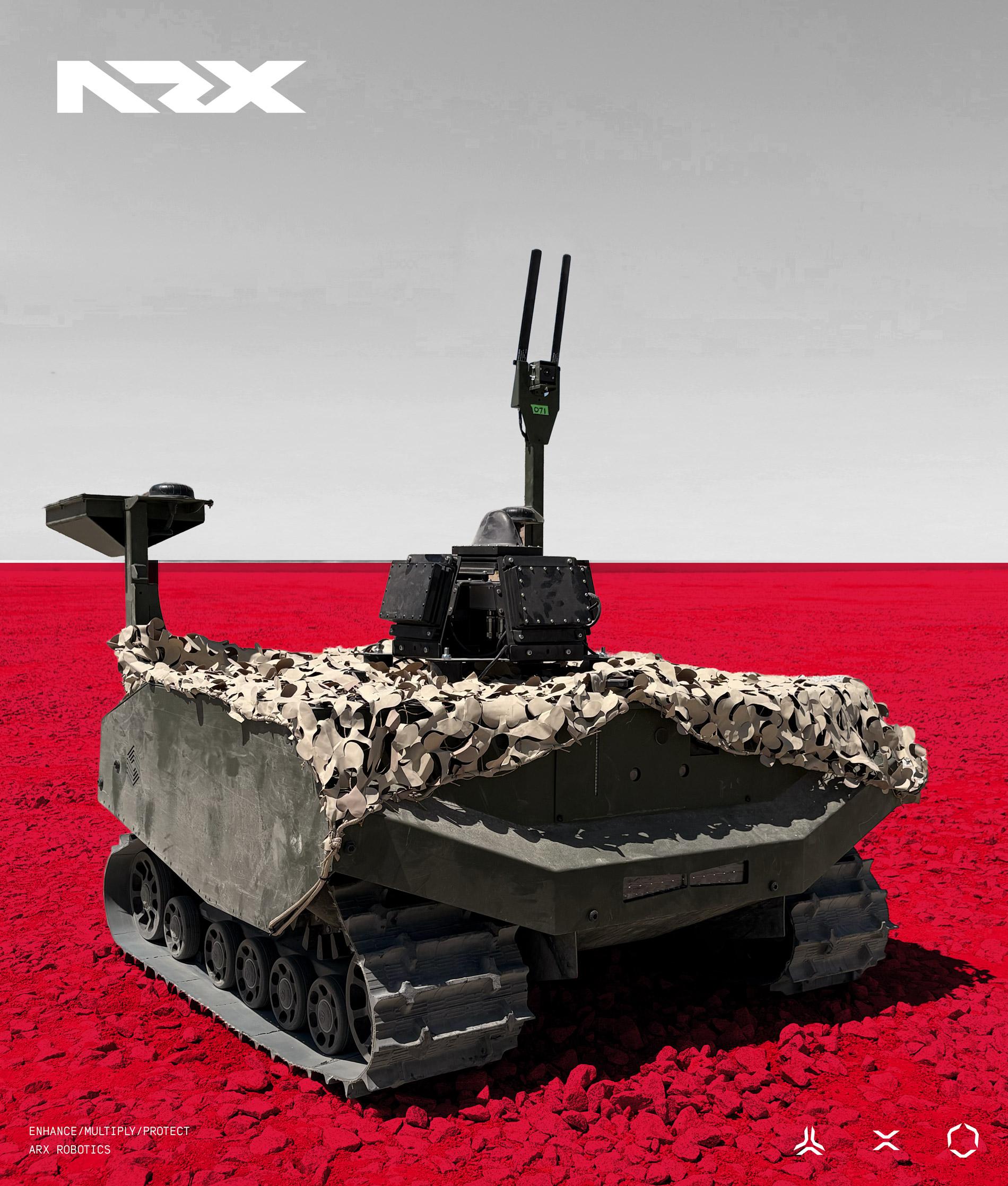
British troops from 2 SCOTS, the unit designated as the experimentation element for the exercise, used ARX Robotics’ Gereon uncrewed ground vehicle (UGV) to locate an armoured vehicle, transmit targeting data to battlegroup headquarters, and enable a Helsing loitering munition (HX-2) to strike the designated target.
The experiment represents one of the most advanced Recce-Strike demonstrations conducted by a NATO army to date, with the entire chain, from target acquisition to engagement to damage assessment, executed successfully under realistic field conditions.
This demonstration directly supports the Army’s drive to field a more lethal force by showing how robotic Recce-Strike chains can speed decision cycles and extend stand-off fires while reducing risk to personnel. It also aligns with the ambition to integrate unmanned systems, data, and rapid innovation to transform how the Army fights and how industry delivers capability.
For the British Army, the exercise demonstrated how robotic and autonomous systems can enhance the way soldiers operate on the ground. By using robots to conduct reconnaissance and deliver targeting data, troops can maintain distance, increase situational awareness, and act with greater speed and precision. This represents a practical step forward in how theArmy integrates new technology into its core tactics, improving safeguards for soldiers while strengthening operational effectiveness.
Marc Wietfeld, CEO and co-founder of ARX Robotics said:
“This is a milestone moment for European land forces. Together with Helsing and the British Army, we’ve shown that Recce-Strike can be achieved with interconnected unmanned ground and aerial systems that are deployable today. ARX exists to help European land forces modernise at speed with software-driven systems that work with the fleets they already have. The Recce concept shows the path: UGVs push sensing forward, data moves to decision makers, and the effector delivers the result. This is a scalable model for upgrading land capabilities across Europe while keeping soldiers safer. This is what modernisation of defence looks like.”
All activities took place in a controlled training environment against simulated enemy forces during Exercise Haraka Storm.
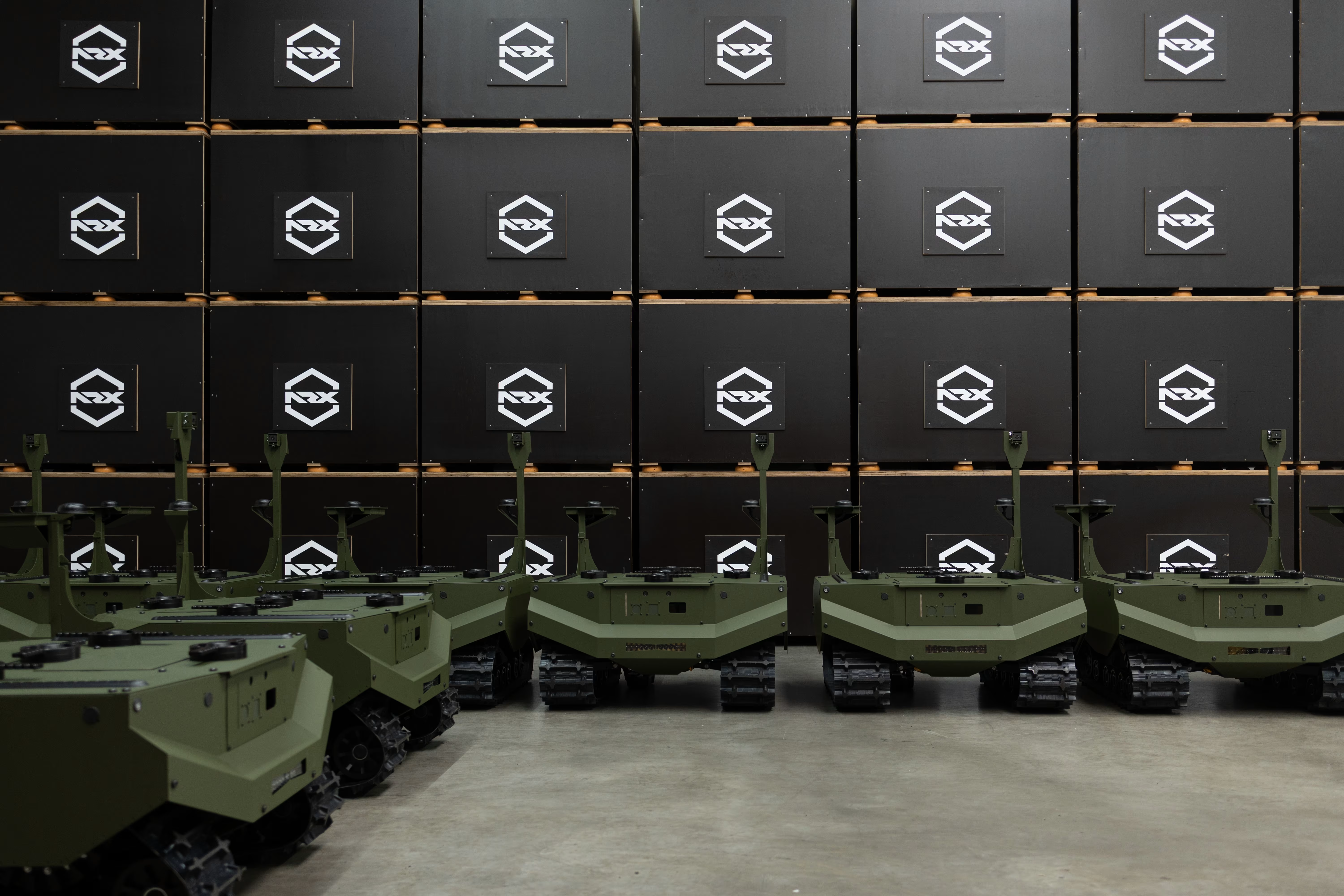
ARX Robotics is a leading European defense-tech company developing Europe’s foremost unmanned ground vehicles (UGVs), the Gereon-RCS series, as well as Mithra OS - an AI-powered operating system that integrates autonomous and legacy platforms. ARX Robotics focuses on the digital transformation of land forces and the development of autonomous unmanned systems. With the ARX Robotic Framework - an approach that combines software-enabled hardware with a modular platform architecture - ARX leverages the potential of robotics and artificial intelligence to reshape the capabilities and capacities of land forces. In addition, ARX modernizes existing vehicle fleets with Mithra OS by integrating AI, sensor systems, and software-defined autonomy. ARX systems and technologies are deployed by several European armed forces and are in use in Ukraine. With strong technological expertise and a high level of innovation, ARX Robotics delivers solutions that maximize soldier protection and strengthen Europe’s strategic independence.